| What is proactive customer support? | Proactive customer support is support that acts before the customer has to report a problem, using known milestones, behaviors, product events, or risk signals to offer help earlier. Predictive customer service goes one step further by using patterns and data to identify which customers or issues are likely to need support next. |
|---|
A practical SaaS guide to preventing issues earlier instead of waiting for customers to report them.
Most SaaS support teams do not choose to be reactive. They often wake up one day and realize the queue has trained them to live there. A bug spikes, customers write in, the team scrambles, and by the time the issue is contained, everyone is already behind on the next batch of tickets. That rhythm can look normal for a long time, especially when the team is moving fast and shipping often. But it quietly creates a bad habit: support only acts once the customer feels the problem.
That is where this conversation starts. Reactive support is not always wrong. Some issues genuinely appear without warning. Some customers will always need help on demand. The problem is when reaction becomes the default operating model, even for problems that were visible earlier in the customer journey.
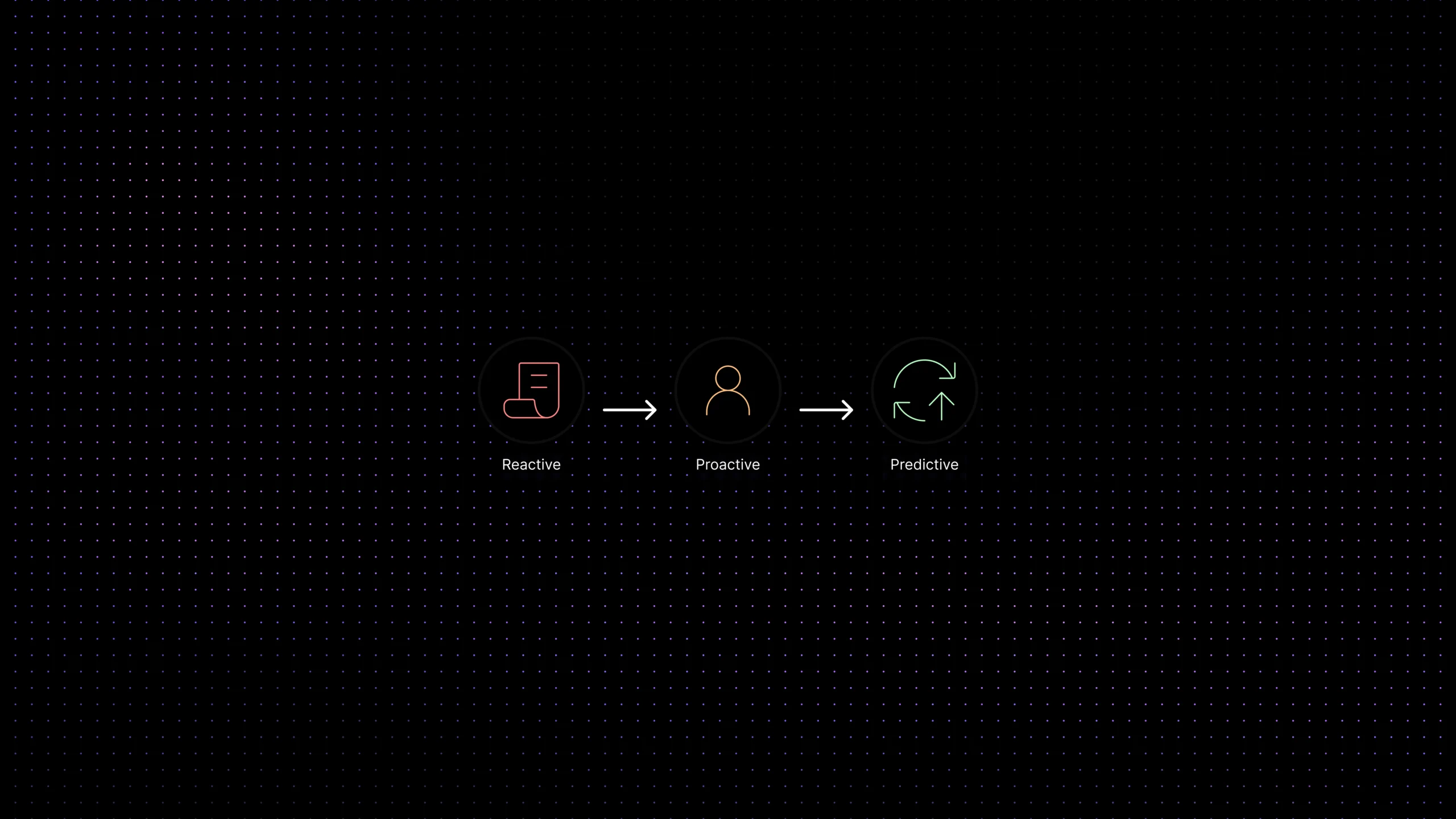
The best SaaS teams eventually move to a different pattern. First they get more proactive. They send the warning before the complaint. They surface the article before the ticket. They reach out when onboarding stalls instead of waiting for frustration to harden. Then, if they have the right data and enough operational discipline, they start to become predictive. They stop asking only, “What happened?” and start asking, “What is likely to happen next?”
This guide breaks that maturity curve down in plain language. It explains what reactive, proactive, and predictive support actually mean, where the real operational difference sits, and what a SaaS team should build first before it starts using bigger claims about anticipation.
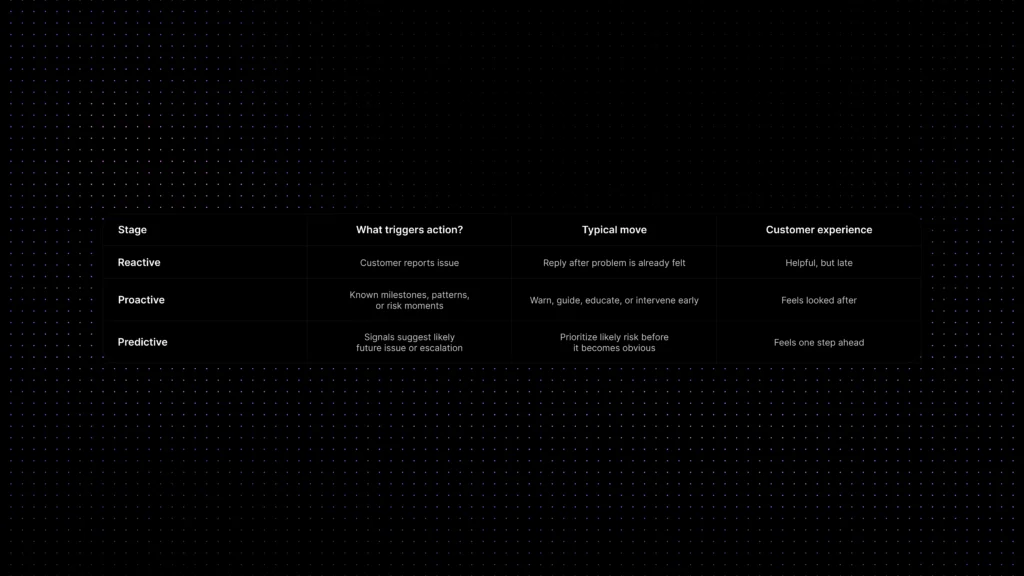
What reactive, proactive, and predictive support mean
Reactive support is the most familiar model. A customer hits a problem, opens chat, sends an email, creates a ticket, or leaves an angry message somewhere public. The support team responds after the need becomes visible.
Proactive customer support shifts the timing. The team already knows a moment is risky, a feature is confusing, a workflow tends to break, or a known issue is about to affect a segment of users. Instead of waiting for the complaint, it acts earlier with guidance, warnings, outreach, or self-service that prevents the ticket or makes the ticket lighter.
Predictive customer service adds another layer. It uses patterns, signals, and historical behavior to estimate which customers, accounts, or conversations are most likely to need help next. In other words, proactive support acts earlier around known situations; predictive support tries to identify the situations before they fully declare themselves.
| Support model | Main trigger | Typical action | Customer experience |
|---|---|---|---|
| Reactive support | The customer reports a problem | Respond to the ticket, chat, email, or complaint | The customer has already felt the issue |
| Proactive support | A known milestone, risk moment, or event appears | Send guidance, warnings, outreach, or self-service help earlier | The customer gets help before frustration grows |
| Predictive support | Signals suggest a future issue is likely | Prioritize accounts, conversations, or workflows before escalation | The customer may avoid the issue entirely or get faster intervention |
Why reactive support creates avoidable friction
Reactive support does more than increase volume. It changes the emotional shape of the conversation. By the time a customer reaches out, they are already blocked, annoyed, confused, or worried that nobody noticed what they were dealing with. Even a strong agent now has to spend part of the interaction recovering trust, not just solving the issue.
It also creates operational waste. The same broken setup path generates the same five questions. The same release note nobody read turns into the same ticket cluster. The same integration limit surprises the same kind of account. When support only responds at the end of that chain, the queue fills with work that was predictable in advance.
This is why reactive teams often feel busier than they are effective. They are working hard, but too much of that work begins after preventable friction has already reached the inbox. That is also where support, self-service, and automation connect. A team that wants earlier intervention usually needs better workflow automation, stronger knowledge delivery, and clearer customer context across channels.
For SaaS teams, earlier support also depends on stronger foundations across AI customer support automation, knowledge base AI chatbots, customer self-service, support workflow audits, and first response time.
What proactive customer support looks like in practice
Proactive support is not a vague promise to “care more.” It is operational. It means choosing moments where early action is cheaper, clearer, and more useful than waiting for the ticket.
A few practical SaaS examples make the difference obvious. If a product update changes a workflow that usually confuses admins, proactive support sends the explanation before the question arrives. If a customer stalls during onboarding at the same setup step for three days, proactive support surfaces the right guide, checklist, or outreach before the account goes cold. If a known third-party outage affects a specific integration, proactive support posts the status update, targets the affected segment, and equips agents with the right macro before the first wave lands.
The important thing here is not only communication. It is timing plus relevance. Bad proactive support feels like spam. Good proactive support feels like the team noticed the customer’s likely problem in time to make their day easier.
This matters because self-service alone often does not solve the full problem. Gartner reported that only 14% of customer service and support issues are fully resolved in self-service, and even for issues customers describe as “very simple,” only 36% are fully resolved there. For SaaS teams, proactive support should not only point users to a help center. It should use customer context, product behavior, and support signals to guide people to the right next step before confusion becomes a ticket.
That is why mature teams usually start with narrow proactive plays. They do not try to predict the future on day one. They identify three or four high-friction moments they already understand well, then build earlier support around those moments.
What predictive customer service adds beyond proactive support
Predictive customer service sounds more dramatic than it often is in practice. It does not require science-fiction certainty. It requires enough historical pattern and live signal quality to make earlier prioritization useful.
Think of it this way: proactive support says, “This moment usually causes trouble, so let’s step in earlier.” Predictive support says, “This specific customer or conversation is showing the same signals that usually lead to trouble, so let’s act now.”
That distinction matters. Proactive support can work with fixed milestones: onboarding day three, failed import attempt, payment decline, release rollout, or known incident. Predictive support needs more than milestones. It needs signal combinations. A sudden drop in usage, unresolved onboarding tasks, prior ticket history, low self-service success, and rising friction in recent conversations may together suggest that this account is heading toward escalation or churn.
Broader customer operations research supports the same direction. McKinsey describes modern customer operations as moving toward simpler, predictive, proactive, and responsive service models, where analytics can help companies predict potential problems before they occur and reach out before customers have to report the issue. Gartner also notes that proactive service can improve customer experience, but warns that poorly executed proactive outreach can create confusion and increase cost to serve. The lesson for SaaS teams is clear: proactive support works best when it is relevant, targeted, and connected to real customer behavior, not when it becomes generic automated messaging.
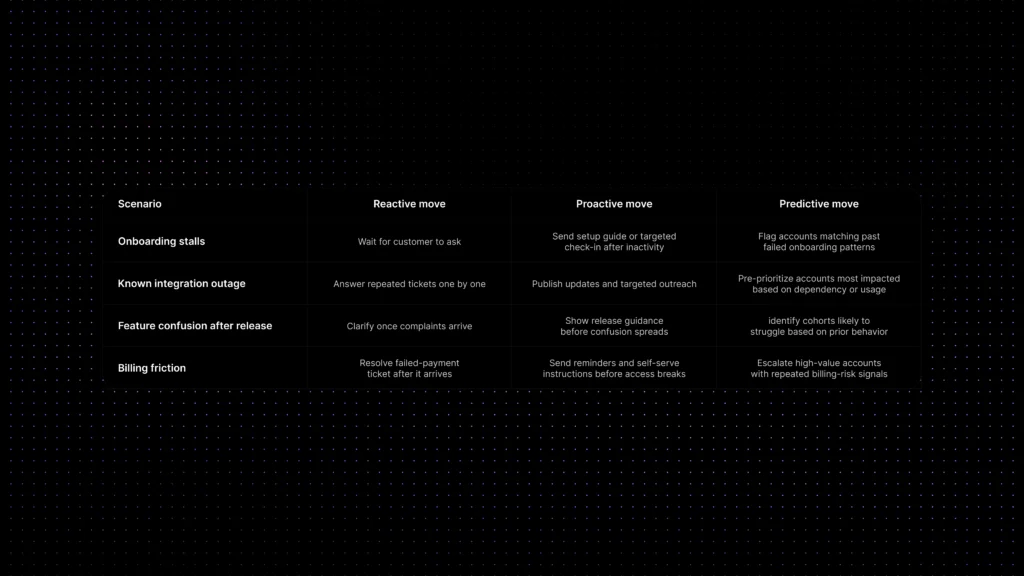
Common proactive and predictive support examples for SaaS teams
| Scenario | Reactive move | Proactive move | Predictive move |
|---|---|---|---|
| Onboarding stalls | Wait for the customer to ask for help | Send a setup guide or targeted check-in after inactivity | Flag accounts whose behavior matches past failed onboarding patterns |
| Known integration outage | Answer repeated tickets one by one | Publish status updates and targeted outreach to affected users | Pre-prioritize accounts likely to be most impacted based on usage or dependency |
| Feature confusion after release | Clarify once complaints arrive | Show release guidance in-app or by segment before confusion spreads | Identify cohorts likely to struggle based on prior workflow behavior |
| Billing friction | Resolve failed-payment tickets after they arrive | Send reminders and self-serve instructions before access breaks | Escalate high-value accounts with repeated billing-risk signals |
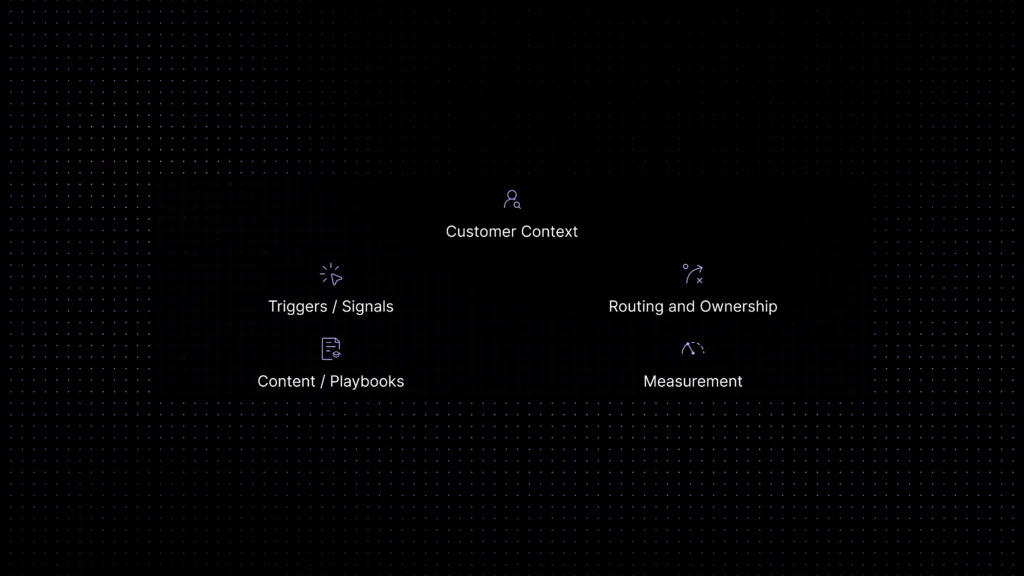
The signals and workflows that make earlier intervention possible
Most teams do not fail at proactive support because they lack ambition. They fail because the signals are scattered, the ownership is fuzzy, or the workflow is too manual to act earlier at scale.
The base layer usually includes five things. First, you need connected customer context: who the customer is, what they have already done, what changed recently, and what support history already exists. Second, you need usable triggers: ticket clusters, product usage anomalies, billing events, feature adoption gaps, knowledge-base failures, service-status events, and patterns from a customer feedback loop. Third, you need routing and ownership rules so an early signal becomes somebody’s job. Fourth, you need content and playbooks that tell the team what to send or do. Fifth, you need measurement so you can tell whether earlier action actually prevented work or simply moved it around.
That is why proactive and predictive support rarely live in one feature. They sit across conversations, ticketing, workflow automation, knowledge, analytics, and context. If those systems are disconnected, the team can spot a risk and still do nothing with it.
How to move from reactive to proactive without overcomplicating support
A lot of teams make this harder than it needs to be. They jump straight to prediction language before they have solved simpler operational problems. A better path is staged.
| Step | What to build first | Why it matters |
|---|---|---|
| 1 | Find the top repeatable friction points | You cannot be proactive everywhere; start where tickets are most predictable. |
| 2 | Create early interventions for those moments | Use guides, status messages, nudges, and targeted outreach before the complaint. |
| 3 | Connect support context and workflows | Signals need ownership, not just visibility. |
| 4 | Measure prevention, not just replies | Track deflected tickets, repeat-contact drops, faster recovery, and clearer customer outcomes. |
| 5 | Add predictive prioritization carefully | Only forecast what you are prepared to act on. |
For most SaaS teams, stage one is enough to create real value. A tighter help center, smarter automation, a clearer support workflow, and better context often move the team from constant firefighting to earlier intervention long before advanced prediction is necessary.
What proactive and predictive support do not solve on their own
They do not fix a weak product. They do not remove the need for fast reactive support when something genuinely breaks. And they do not magically create trust if the early outreach is irrelevant, mistimed, or obviously automated in the wrong way.
They also do not replace judgment. A support team still needs to decide when a risk is worth escalating, when silence is better than outreach, and when a customer needs a real human explanation instead of another nudge.
That is why the strongest proactive teams are usually not the ones with the most elaborate predictions. They are the ones with the clearest operating habits: fewer silos, better workflows, clearer ownership, and a tighter connection between knowledge, conversations, and action.
Where Inquirly fits
Inquirly fits this shift because proactive and predictive support only work when conversations, ticketing, workflows, knowledge, and customer context are connected. If support signals are trapped in separate tools, earlier intervention becomes a coordination problem before it becomes a customer-experience win.
With Inquirly, SaaS teams can bring shared inbox workflows, ticketing logic, knowledge delivery, automation rules, and context-aware support into one workspace. That makes it easier to spot repeatable friction, act earlier, route the right response, and give agents the context they need without stitching the story together by hand.
For teams already using AI in support, this connected context matters even more. AI suggestions, knowledge retrieval, proactive workflows, and agent handoffs are more useful when they are grounded in the same customer history and support operations, rather than scattered across disconnected systems.
Conclusion
Reactive support will never disappear completely. Customers will always hit unexpected problems. But a team that stays reactive by default ends up doing too much heavy work too late.
The better path is usually gradual. Start by identifying the moments that predictably create friction. Build earlier help around them. Connect the signals to ownership. Then, only when the basics are working, add predictive logic where it genuinely improves prioritization.
That is the real journey from reactive to proactive to predictive support. Not a buzzword ladder. A support system that gets earlier, smarter, and more useful over time.
See how Inquirly combines conversations, ticketing, workflow automation, knowledge, and support analytics in one connected workspace so your team can move earlier instead of just responding later.